Educational Posters for Kids: What Actually Makes Them Work in Real Learning Spaces
Colorful, laminated, and full of friendly animals or smiling letters—Educational Posters for Kids are everywhere. But not all posters deliver real learning value. Many parents, teachers, and homeschoolers buy them expecting instant engagement, only to find them gathering dust on a wall or ignored during circle time. The truth? Their effectiveness depends less on how bright they look and more on how thoughtfully they’re designed, placed, and used.
Why These Posters Matter—When Done Right
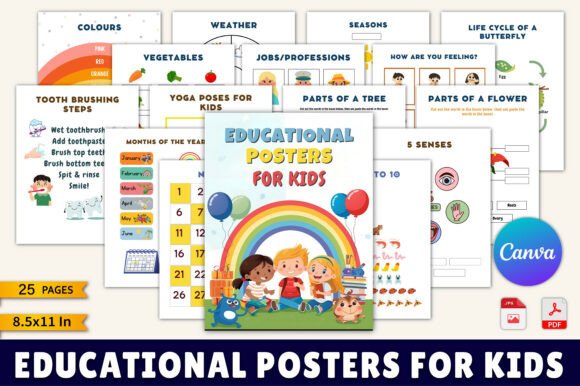
Educational Posters for Kids aren’t just decorations. They’re visual anchors for early learning—supporting memory, vocabulary, routine-building, and self-expression. A well-placed poster showing the life cycle of a butterfly reinforces science concepts during snack time. A hygiene poster with clear tooth-brushing steps helps kids internalize habits without constant reminders. And a feelings chart gives children language to name emotions before they can fully articulate them.
What sets the best collections apart is intentionality: each poster connects to developmental milestones, classroom routines, or home-based learning goals—not just aesthetic appeal.
Assuming “More Posters = More Learning”
It’s tempting to fill every available wall space—but overcrowding dilutes impact. Children process visuals selectively. Too many competing images cause cognitive overload, especially for preschoolers or neurodivergent learners. One study found that classrooms with 3–5 high-quality, purposefully rotated posters saw stronger retention than those with 12+ static displays.
Better approach: Start with 3 core themes—like Alphabet Phonics, Good Hygiene Habits, and Feelings Professions. Rotate them every 4–6 weeks based on current units or seasonal topics (e.g., swap in Months Seasons before spring).
Overlooking Placement and Accessibility
A stunning Body Parts Five Senses poster loses its value if hung above eye level—or behind a bookshelf. Young children need visuals at their height (roughly 2–4 feet off the floor) and within arm’s reach for interaction. Also, avoid glare from windows or lights that wash out colors or text.
Better approach: Mount posters on low walls, bulletin boards, or even cabinet doors in kitchens or bathrooms. Use the Notes Section built into many templates for sticky-note prompts or child-drawn additions—turning passive viewing into active participation.
Mistaking “Editable” for “Effortless Customization”
The promise of an Editable Canva Link sounds ideal—until you open it and face layers of locked elements, missing fonts, or mismatched color palettes. Some creators assume users know how to adjust spacing, resize icons without distortion, or replace clipart meaningfully.
Better approach: Before downloading, preview the Canva template to check: Are fonts embedded or system-dependent? Can you change text color *and* background contrast for readability? Is there a guide layer or instructions included? Look for collections like this one that include 25 distinct, well-organized Canva templates—each tested for intuitive editing, not just theoretical flexibility.
Ignoring Print Quality Until It’s Too Late
Downloading a PDF and printing at a local shop often reveals surprises: washed-out blues, blurry numbers, or faint outlines in the Yoga for Kids poses. Low-resolution files may look fine on screen but fail when enlarged to 24x36 inches—especially critical for details like flower anatomy or weather symbols.
Better approach: Always verify file specs before purchase. This collection includes High-Quality Ready-to-Upload PDF Files optimized for professional printing—CMYK color mode, 300 DPI, and bleed-safe margins. If printing at home, test one page first using “actual size” scaling and matte photo paper for crispness.
Skipping the “How” Behind the “What”
A poster showing Healthy Eating with apples and candy bars side-by-side won’t teach discernment unless paired with conversation. Without context, kids may memorize “apple = good,” but miss nuance—like portion size, preparation methods, or cultural food traditions.
Better approach: Use posters as springboards—not answers. Ask open questions: “Which foods give us energy to play?” or “What do you notice about how these fruits grow?” Leverage the Notes Section to jot down child-led observations or add photos of meals your family prepared together.
What to Check Before You Choose or Use
- Developmental fit: Does the Numbers Counting poster go up to 30 *and* include counting to 10 with objects? That dual focus supports both rote recitation and one-to-one correspondence—the foundation of math understanding.
- Inclusivity in design: Do the Professions and Body Parts posters reflect diverse skin tones, abilities, and family structures? Representation isn’t decorative—it builds belonging and accurate worldviews.
- Real-world utility: Will the Science Basics poster hold up during hands-on planting or butterfly observation? Are labels clear enough for a 5-year-old to point to “stamen” or “chrysalis” confidently?
- Practical integration: Can you use the Colors Weather poster during morning meetings? Pair it with a simple “What’s the sky doing today?” ritual to reinforce observation and descriptive language.
Final Thought: Posters Are Tools, Not Teachers
Educational Posters for Kids shine brightest when they extend—not replace—human connection. A child tracing the outline of a tree on the Parts of a Tree Flower poster while talking with a caregiver learns far more than one staring silently at a wall. The strongest collections support that interaction: with clean layouts, intentional spacing, editable flexibility, and topics that invite questions, movement, and reflection.
If you’re setting up a playroom, prepping for homeschool year one, or refreshing a kindergarten corner—choose posters that leave room for curiosity. Not just color. Not just content. But clarity, care, and quiet moments where learning feels natural, joyful, and deeply human.