Self-Care Wellness Workbook: Your Practical Path to Sustainable Well-Being
Feeling stretched thin—mentally, emotionally, and physically—is more common than most people admit. You show up for work, family, friends, and responsibilities, yet rarely pause to ask: What am I doing for myself—consistently, kindly, and intentionally? That’s where the Self-Care Wellness Workbook steps in—not as another productivity tool or rigid self-help system, but as a grounded, compassionate companion for real life.
This isn’t about perfection. It’s about presence. The Self-Care Wellness Workbook meets you where you are: whether you’re navigating high-pressure work seasons, recovering from burnout, supporting others as a coach or therapist, or simply craving more calm and clarity in your day-to-day. Designed with intention and ease in mind, it transforms abstract ideas like “self-care” and “balance” into tangible, doable actions—backed by evidence-informed practices and gentle structure.
Why “Just Trying Harder” Doesn’t Work—and What Does
Many adults struggle not from lack of effort, but from lack of alignment. They track calories but ignore emotional exhaustion. They meditate once a week but skip rest when overwhelmed. They set goals without checking if those goals honor their energy, values, or current season of life. This misalignment leads to cycles of guilt, inconsistency, and eventual disengagement.
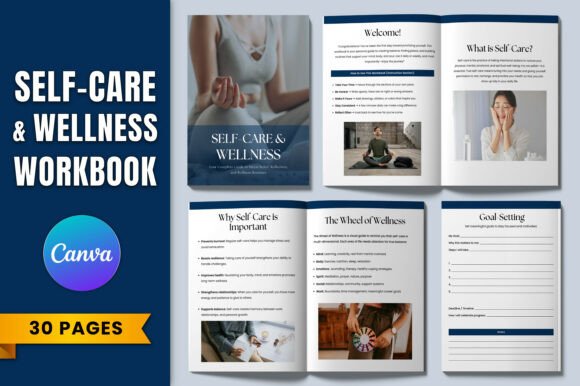
The Self-Care Wellness Workbook addresses this head-on—not by adding more to your plate, but by helping you clarify what truly sustains *you*. Its framework starts with the Wellness Wheel, a holistic visual tool that invites reflection across six interconnected dimensions: mind, body, emotions, spirit, social connection, and work/life integration. When one area is neglected—say, social nourishment during remote work or spiritual grounding amid caregiving—it inevitably impacts the others. The workbook helps you spot those imbalances early and respond with kindness, not criticism.
Real Tools for Real Days
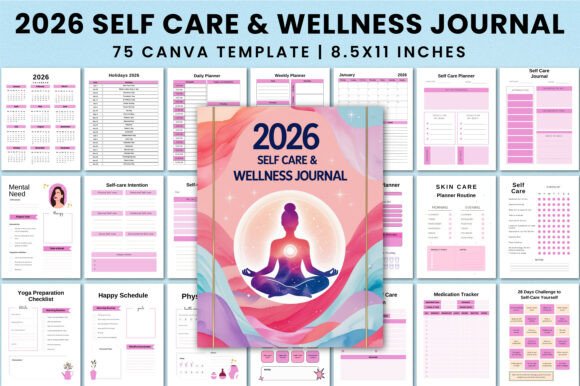
What makes the Self-Care Wellness Workbook especially useful is its emphasis on *implementation*, not just inspiration. Each section includes ready-to-use pages designed to fit seamlessly into your rhythm:
- Daily Mindfulness Practices offer bite-sized options—like a 2-minute breath check-in, a gratitude prompt with space to write three specific things (not just “my family”), or a nature connection suggestion tailored for urban or rural settings.
- Stress & Emotional Wellness Tools go beyond surface-level tracking. The stress trigger checklist helps you notice patterns (“I feel irritable every Tuesday afternoon after back-to-back Zooms”)—so you can adjust proactively. Mood trackers include optional reflection prompts like, “What helped lift my mood today? What drained it?”
- Healthy Lifestyle Trackers avoid judgmental language. Instead of “Did you exercise?” the gentle movement log asks, “How did my body move today—and how did it feel?” Sleep and hydration logs include notes for context (e.g., “slept 6.5 hrs—had caffeine after 2 p.m.”), turning data into insight.
- Morning & Evening Routines guide you to design rituals—not rigid schedules—that support transition and grounding. One user built a 7-minute evening wind-down: dim lights, sip herbal tea, jot one win from the day, and stretch shoulders. Another started mornings with a “pause breath” before unlocking their phone.
More Than a Personal Practice—A Shared Resource
The Self-Care Wellness Workbook is uniquely versatile. Individuals use it solo to rebuild consistency after overwhelm. Coaches and therapists integrate select pages—like the Wellness Wheel or goal-setting worksheets—into client sessions, offering structure without prescriptiveness. Educators, HR professionals, and wellness coordinators print and adapt sections for team workshops or mental health initiatives.
For practitioners, the workbook serves as both a modeling tool (“Here’s how I reflect on my own boundaries”) and a practical handout. Its clean, uncluttered layout and inclusive language make it accessible across ages, backgrounds, and experience levels—even those new to journaling or mindfulness find it unintimidating.
Building Habits That Stick—Without Willpower
Sustainable self-care isn’t about discipline. It’s about design. The Self-Care Wellness Workbook supports habit formation through three key strategies:
- Micro-commitments: Instead of “meditate daily,” try “pause and name one sensation before my first sip of coffee.” Small anchors build neural pathways over time.
- Context pairing: Link new practices to existing routines—e.g., “After I brush my teeth at night, I’ll complete my mood tracker.” The workbook includes habit tracker grids with built-in flexibility (skip days without penalty; celebrate streaks of 3, not 30).
- Reflection over rigidity: Weekly growth pages invite questions like, “What felt nourishing this week? What felt forced?” This cultivates self-awareness—the foundation of lasting change.
Thoughtful Design, Meaningful Impact
Every element of the Self-Care Wellness Workbook reflects deep understanding of human behavior. There are no blank pages demanding creativity on demand—just guided prompts with enough space to write freely, yet focused enough to prevent overwhelm. The typography is clear and restful. The layout leaves breathing room—not clutter. Even the paper-friendly formatting (for printable users) considers ink usage and binding.
And because well-being isn’t one-size-fits-all, the workbook encourages personalization. One person may focus heavily on sleep and body scan worksheets; another might return weekly to the vision page to reconnect with purpose. There’s no “right” way—only what resonates, adapts, and endures.
A Gift That Keeps Giving—To Yourself and Others
Gifting the Self-Care Wellness Workbook signals something powerful: “I see how much you give—and I honor your need to replenish.” It’s a meaningful alternative to generic journals or planners, especially for teachers, nurses, entrepreneurs, or anyone whose role centers on caring for others. As a personal investment, it’s equally valuable—not as a luxury, but as essential maintenance for your most important resource: you.
You don’t need to wait for burnout to begin prioritizing your well-being. You don’t need more motivation—you need better support. With its blend of science-backed tools, compassionate framing, and practical usability, the Self-Care Wellness Workbook offers exactly that: a steady, supportive path forward—one thoughtful page at a time.