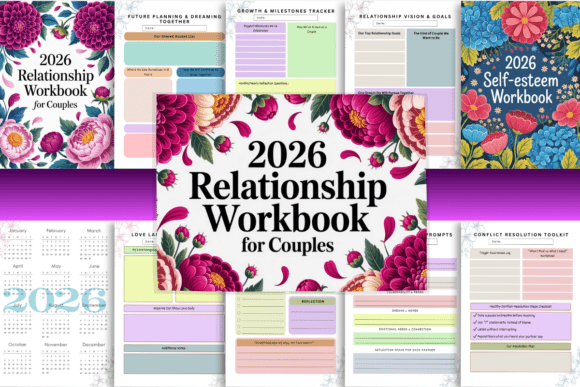
Deepen Your Connection with the 2026 Relationship Workbook for Couples
Relationships don’t just grow stronger on their own—they’re nurtured, tended to, and intentionally shaped. In a world of endless distractions, quick-scrolling feeds, and packed schedules, making space for meaningful connection often slips through the cracks. That’s where the 2026 Relationship Workbook for Couples steps in—not as a quick fix, but as a grounded, thoughtful companion for couples ready to invest in something real.
More Than Just Journal Pages—A Shared Journey in Print
This isn’t another generic planner or a stack of blank pages waiting for inspiration. The 2026 Relationship Workbook for Couples is a guided, 120-page resource designed specifically for two people who want to move beyond surface-level routines and build lasting emotional resonance. Its no-bleed print format means every page feels intentional—clean, focused, and distraction-free. Whether you're newly dating, engaged, married, or navigating life after kids have left home, this workbook meets you where you are.
What sets it apart is its balance: equal parts reflection, action, and celebration. It doesn’t assume you’re “broken” or need fixing. Instead, it operates from the belief that even healthy relationships thrive when given consistent, gentle attention—and that small, consistent efforts compound into profound closeness over time.
Your Relationship Vision—Starting With Shared Clarity
Many couples drift because they haven’t paused to define what “together” truly means to them—not just now, but in the seasons ahead. The Relationship Vision Goals section invites both partners to co-create a living definition of your partnership. Think beyond “we want to be happy.” What does trust look, sound, and feel like? How do you want to handle stress as a team? What values anchor your decisions—from finances to family time to how you resolve disagreements?
One couple used this section to outline a shared “communication covenant”: no phones during meals, weekly 20-minute check-ins without agenda, and a “pause word” for heated moments. These weren’t rules imposed—but agreements born from honest reflection. That kind of clarity doesn’t happen by accident. It happens when you give yourselves permission to name what matters.
Love Languages—Beyond the Quiz, Into Daily Practice
You’ve likely taken the Love Languages quiz—or heard about it. But knowing your language is only step one. The 2026 Relationship Workbook for Couples goes further: it helps you translate that knowledge into daily habits. There are prompts not just to identify your top language, but to explore how it shows up in childhood, how it’s been miscommunicated in past relationships, and—most importantly—how your partner experiences *your* expressions of love.
For example, if one person’s primary language is Acts of Service, but the other expresses love through Words of Affirmation, misunderstandings can pile up fast. This section gives space to notice those gaps—and then bridge them. A simple prompt like, “When I felt most seen by you last month, it was because…” opens doors that small talk rarely reaches.
Communication Check-Ins—Turning Conversation Into Connection
We talk all day—about chores, plans, news, logistics. But how often do we speak from our hearts *with* our partners—not at them? The Communication Check-Ins are structured yet flexible. They guide you to pause, listen deeply, and respond—not react. Prompts include questions like:
- “What emotion did I hold back today—and why?”
- “When did I assume I knew what you meant instead of asking?”
- “What’s one thing I’m proud of us for handling well this week?”
These aren’t interrogation tools. They’re invitations—to soften, to witness, to repair before resentment settles in. Many users report that just committing to these 15-minute sessions twice a week reshaped how they navigate everything else.
Conflict Resolution Toolkit—Where Disagreements Become Opportunities
Healthy couples don’t avoid conflict—they navigate it with care. The Conflict Resolution Toolkit offers more than “I statements.” It includes de-escalation scripts, empathy-building exercises, and space to map out recurring patterns (“What usually triggers us? Where do we get stuck? What would resolution actually feel like?”). One powerful feature is the “Aftermath Reflection,” completed separately *after* a disagreement has cooled. It asks each person to write down what they needed, what they contributed to the tension, and one small step forward—not to assign blame, but to build mutual accountability.
This isn’t about winning arguments. It’s about protecting the relationship’s emotional safety net—even when things get messy.
Emotional Intimacy Prompts—Building Trust Through Vulnerability
Intimacy isn’t just physical—it’s the quiet courage to say, “This scares me,” or “I still carry that old wound,” or “I need more of your presence right now.” The Emotional Intimacy Prompts gently invite that bravery. They explore formative experiences—how love was shown (or withheld) in your families, what vulnerability taught you early on, and how those lessons live in your current relationship.
One user shared how answering, “What’s one hope I haven’t voiced because I’m afraid it’s too big?” led to a conversation about relocating for her dream job—a topic they’d avoided for months. That single prompt didn’t solve everything—but it cracked open a door they’d kept closed.
Date Night Fun Ideas Planner—Reigniting Joy, Not Just Checking Boxes
Date nights lose meaning when they become obligations rather than delights. The Date Night Fun Ideas Planner flips the script. It’s not just a list of suggestions (though it includes plenty—think “stargazing with homemade hot chocolate” or “swap roles for a day”). It also guides you to reflect: What made us laugh uncontrollably last year? What new skill have we both wanted to try? What memory do we want to create before 2026 ends?
There’s even a shared bucket list tracker—so dreams like “take a pottery class together” or “plan a weekend road trip with zero agenda” stay visible, not forgotten in a notes app.
Appreciation & Gratitude Logs—Training Your Attention Toward Each Other
Our brains are wired to notice problems faster than positives—a survival trait that doesn’t serve love. The Appreciation Gratitude Logs rewire that habit. They’re simple: space to note one specific thing you admired, appreciated, or felt grateful for about your partner each day. Not “you’re great”—but “I loved how you held space for me when I was overwhelmed this morning,” or “thank you for remembering to text me that funny meme—I needed that laugh.”
Over time, this practice shifts attention from what’s missing to what’s already present—and strengthens neural pathways linked to kindness and attunement.
Why Now? Why This Workbook?
In 2024 and 2025, therapists, coaches, and relationship educators reported a growing demand—not for crisis intervention, but for *preventative maintenance*. People want tools that fit into real life: no subscriptions, no screens, no algorithms. Just two people, paper, pens, and presence. The 2026 Relationship Workbook for Couples answers that call. It’s designed for consistency, not intensity—10 minutes here, 20 there, no pressure to “catch up.”
It’s also built for flexibility. Use it cover-to-cover over 12 weeks. Flip to the Conflict Resolution Toolkit before a tough conversation. Grab the Date Night Planner when you realize you haven’t done anything fun in three weeks. Return to the Vision Goals every season to recalibrate.
And because it’s dated for 2026, it carries gentle urgency—not as a deadline, but as an invitation: This year, let’s choose connection. Not someday. Not when things calm down. Now.
If you’ve ever wished for a way to slow down, tune in, and build something deeper—one honest page at a time—the 2026 Relationship Workbook for Couples might be the quiet, steady companion you’ve been looking for.