Pain Tracker Symptom Relief Journal
If you live with chronic pain—even if it’s unpredictable, hard to describe, or dismissed in past conversations—you’re not alone. What *is* different about the Pain Tracker Symptom Relief Journal is how thoughtfully it bridges intuition and evidence. It’s not a medical diagnosis tool or a replacement for care—but it *is* a quiet, consistent companion that helps you gather your own data, spot what matters, and show up more confidently in appointments, therapy sessions, or daily life.
More Than Just a Log—It’s a Pattern Lens
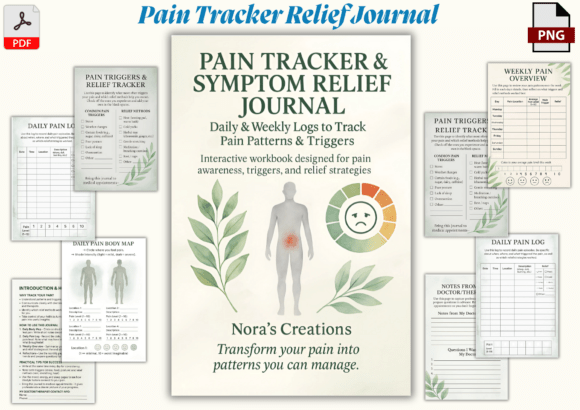
Chronic pain rarely follows a simple script. One day might bring sharp lower-back discomfort after sitting for 30 minutes; another could mean fatigue-driven headaches that worsen with skipped meals and poor sleep. The Pain Tracker Symptom Relief Journal gives you space to map those nuances—not just “how bad” but *where*, *when*, *with what*, and *what helped*. Its 57 pages unfold like a gentle conversation with yourself: no pressure to be perfect, just permission to notice.
The daily pain body maps let you shade or circle areas of discomfort on simple, intuitive illustrations—no anatomy degree required. Pair that with the daily log tracking intensity (on a 0–10 scale), triggers (stress? weather? activity?), and relief methods (heat, stretching, rest, CBD, distraction), and patterns begin emerging within days—not months.
Real-Life Uses That Fit Your Rhythm
You don’t need to be a health professional—or even especially organized—to benefit. A freelance graphic designer used the weekly pain overview graph to realize her migraines spiked every Thursday, correlating with back-to-back video calls and late lunch. She adjusted her schedule and added a 10-minute guided breathwork break—then shared the graph and notes with her neurologist. A teacher recovering from fibromyalgia filled the mood-energy-pain correlation page each evening, spotting how low motivation often preceded flare-ups by 24 hours—giving her time to prioritize rest before exhaustion set in.
Small business owners use the “Notes from Doctor/Therapist” section to draft questions *before* appointments—reducing anxiety and making visits more productive. Caregivers print extra copies for loved ones who struggle to articulate changes. Educators adapting lesson plans for students with chronic conditions reference the self-care coping toolbox to co-create realistic classroom accommodations.
Designed for Clarity, Not Clutter
This isn’t a dense clinical workbook. Nora’s Creations built the Pain Tracker Symptom Relief Journal around calm: soft watercolor accents, generous margins, uncluttered layouts, and intuitive icons. The 6x9-inch size fits neatly in a tote, desk drawer, or bedside table—and because it’s delivered as an instant-download PDF and PNG, you can print only what you need, when you need it. No subscriptions. No login walls. Just clarity, ready when you are.
Each section flows into the next. Start with the daily logs for a week. Then flip to the weekly overview to visualize trends. Later, revisit the monthly reflection to notice subtle shifts—like how walking 15 minutes three times a week gradually lowered average pain intensity, or how better hydration reduced afternoon joint stiffness. These insights aren’t abstract—they’re grounded in *your* experience.
What Makes This Different From Generic Trackers?
Most symptom journals ask *what* happened. This one asks *what mattered*. The sleep-pain connection log doesn’t just record hours slept—it invites reflection on sleep quality, nighttime awakenings, and whether pain woke you or kept you awake. The pain triggers & relief tracker separates “things that made it worse” from “things that eased it”—helping you distinguish between correlation and causation over time.
And unlike apps that require charging, updates, or data permissions, this journal lives offline. No notifications. No algorithms interpreting your entries. Just your voice, your pace, and your privacy.
Practical Tips Before You Begin
You don’t need to fill every page every day. Start with just two sections: the daily pain body map and one sentence in the daily log. Consistency beats completeness—five thoughtful minutes twice a week builds more insight than rushed entries daily.
Print on standard 8.5x11 paper and trim to 6x9 inches—or keep it digital using a tablet with a stylus. Many users annotate PDFs directly using free tools like Xodo or Apple Books. If sharing with providers, consider printing just the weekly overview and monthly reflection pages—they distill complexity into digestible visuals and summaries.
Remember: tracking isn’t about fixing everything at once. It’s about gathering evidence so you can make smaller, smarter choices—like swapping a long commute for audio meditation, adjusting your pillow height, or asking for help earlier in the day. Progress isn’t always linear, but with this journal, it becomes visible.
Who Finds It Especially Helpful?
- People newly diagnosed who want to understand their condition before their next appointment.
- Care partners supporting someone with invisible illness—and needing a shared language for symptoms.
- Therapists and coaches who recommend structured self-reflection tools to clients managing pain-related anxiety or burnout.
- Bloggers and educators creating accessible wellness content—this journal serves as both a resource and a real-world example of embodied health literacy.
- Remote workers and creatives whose pain fluctuates with screen time, posture, or irregular schedules—and need flexible, low-friction tracking.
The Pain Tracker Symptom Relief Journal meets you where you are—not as a patient, but as a person gathering wisdom. It won’t erase pain, but it can restore agency. And sometimes, that’s the first, most vital step toward relief.