🔥 1000 Galactic Dreams Prompts
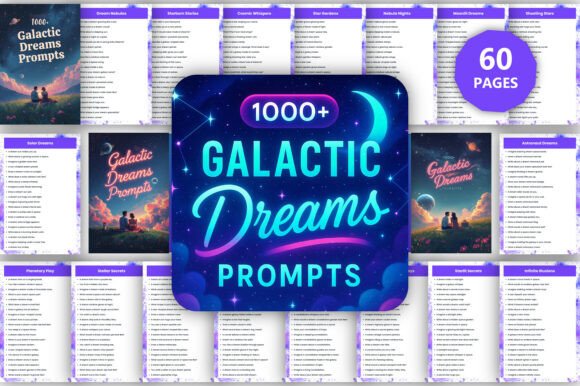
🔥 1000 Galactic Dreams Prompts is a curated collection of space-themed creative prompts designed to support writing, drawing, reflection, and imaginative exploration. Organized into 50 thematic sections—including Cosmic Whispers, Astral Adventures, Celestial Creatures, Space Science, and Dream Realms—the resource offers 1,000 distinct starting points. Each prompt functions as an open-ended invitation: a question, scenario, visual cue, or reflective prompt intended to spark ideas rather than prescribe answers. The material is delivered in a high-quality PDF format with galaxy-inspired page design, starry backgrounds, themed headers, and dedicated lined note pages for responses.
This resource appeals most directly to individuals seeking structured yet flexible tools to cultivate creativity across age groups and contexts. Educators may consider it for classroom warm-ups, cross-curricular science-and-language activities, or differentiated learning extensions. Homeschooling families might use it to support narrative development, observational journaling, or interdisciplinary projects linking astronomy, art, and emotional literacy. Writers—especially those working with speculative fiction, poetry, or personal essay—can draw from its prompts to break through blocks or explore metaphor-rich themes like time, scale, wonder, and connection. Adults pursuing mindful creativity or reflective practice may find value in its emphasis on curiosity, gratitude, and dream-inspired thinking.
One practical benefit is its intentional inclusivity: prompts avoid rigid skill prerequisites and are phrased to accommodate varying levels of literacy, cognitive development, and artistic confidence. A child might sketch a “planet made of music,” while a teen could draft a first-contact dialogue grounded in real astrophysical constraints—or an adult might reflect on how “gravity shapes not just orbits, but relationships.” The inclusion of editable Canva access further supports customization—teachers can adapt wording for grade level, therapists can align prompts with therapeutic goals, and designers can reformat for print or digital use.
However, users should understand certain tradeoffs. Because the prompts prioritize breadth and accessibility over deep subject-matter scaffolding, they do not include background explanations, teaching notes, or answer keys. Someone seeking ready-to-teach lesson plans with learning objectives, standards alignment, or assessment guidance would need to supplement this resource independently. Similarly, while the space theme provides cohesion, it may not suit learners or settings where thematic focus on astronomy or cosmic imagery feels disconnected from current curricular priorities or personal interests.
The layout and visual design enhance engagement but also introduce considerations. The starry backgrounds and decorative elements contribute to atmosphere but may affect readability for some users—particularly when printing on lower-resolution printers or using screen readers. Those requiring high-contrast, dyslexia-friendly, or minimal-distraction formats should preview sample pages before committing. Additionally, while the PDF is optimized for professional printing, file size and embedded graphics mean it may load slowly on older devices or limited-bandwidth connections.
For educators evaluating whether 🔥 1000 Galactic Dreams Prompts fits their needs, alignment with specific instructional goals matters more than general appeal. It works well when the objective is to stimulate divergent thinking, encourage low-stakes creative output, or invite interdisciplinary connections—not when the goal is direct instruction in astronomy concepts, technical writing conventions, or standardized test preparation. In classrooms where student choice, voice, and process-oriented learning are emphasized, these prompts serve as effective catalysts. In contrast, highly scripted or outcomes-driven environments may find them less immediately actionable without significant adaptation.
Families using the resource at home should consider how consistently it will be used. Its strength lies in regular, short engagements—such as daily journaling, weekly drawing challenges, or bedtime reflection—not one-off assignments. Users who prefer tactile tools may appreciate the printable format, while those favoring digital interactivity might miss built-in features like audio narration, animation, or adaptive feedback found in some educational apps.
Alternatives may be preferable depending on context. For science-focused inquiry, resources like NASA’s educator guides or the “Ask An Astronomer” series provide vetted content with conceptual depth. For structured creative writing development, programs such as NaNoWriMo Young Writers Program offer progressive scaffolding and community support. For younger children needing concrete vocabulary-building or phonics integration, leveled picture-book prompts or illustrated story-starters may better match developmental readiness. And for therapeutic or clinical applications, evidence-informed tools like art therapy directive cards or CBT-based journaling frameworks offer targeted psychological grounding.
Decision-making hinges on clarity about purpose. If the goal is to nurture imaginative fluency across ages—with flexibility, visual appeal, and thematic unity—🔥 1000 Galactic Dreams Prompts offers a cohesive, reusable foundation. If the priority is subject-matter accuracy, pedagogical structure, accessibility compliance, or domain-specific skill building, complementary or alternative resources may better serve the need. Reviewing a sample section—especially one aligned with your intended use case—provides the most reliable insight into fit. Consider whether the tone, complexity, and visual presentation resonate with your audience’s expectations and practical constraints.
Ultimately, this resource functions best as a catalyst rather than a curriculum. Its value emerges not from what it delivers outright, but from how users engage with it: adapting, extending, and interpreting prompts in ways that reflect their unique goals, contexts, and creative rhythms. When matched thoughtfully to intention and environment, it supports sustained imaginative practice—not as an end in itself, but as a means of developing observation, empathy, curiosity, and expressive capacity across the lifespan.