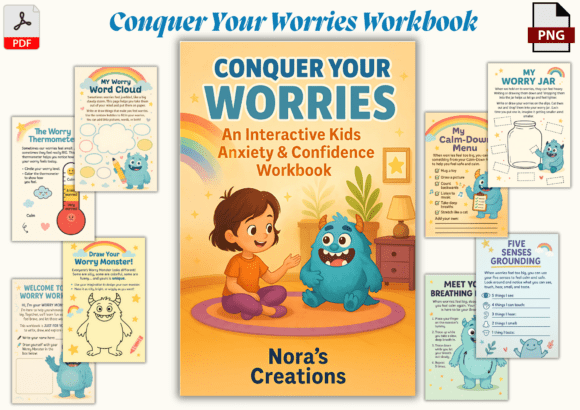
Help Your Child Build Real Confidence—One Worry at a Time
Every child feels anxious sometimes. A new classroom. A thunderstorm. The first day of soccer practice. These aren’t “bad” feelings—they’re signals, not stop signs. But when worries grow louder than curiosity or courage, kids need more than reassurance. They need tools—simple, joyful, and deeply personal—that help them name what’s happening inside, calm their nervous system, and reconnect with their own strength. That’s where the Anxiety Confidence Workbook steps in—not as a fix, but as a gentle, illustrated companion for children ages 5 to 10.
Why Playful Tools Work Better Than Lectures
Young children don’t process emotions like adults do. They rarely say, “I’m feeling overwhelmed by uncertainty.” Instead, they might cling, shut down, cry without explanation, or act out. Traditional talk-based strategies often miss the mark—not because kids aren’t listening, but because their brains are still wiring the pathways between feeling, language, and action.
The Anxiety Confidence Workbook meets kids where they are: in the world of color, story, movement, and choice. Its 19 pages aren’t filled with dense text or clinical definitions. Instead, you’ll find friendly monster characters who model big feelings without shame—like Worry Worm, who curls up tight when things feel too much, or Calm Cloud, who floats gently with deep breaths. These aren’t gimmicks. They’re cognitive anchors—visual metaphors that help kids recognize, externalize, and begin to reshape their inner experience.
What Makes This Workbook Different (and Why It Sticks)
Not all anxiety resources for kids are created equal. Some rely heavily on passive reading. Others assume a high level of literacy or emotional vocabulary. The Anxiety Confidence Workbook is built around three non-negotiable design principles: accessibility, interactivity, and agency.
- Accessibility: Clear, spacious layouts. Large, friendly fonts. Minimal text per page. Visual cues instead of instructions—like arrows guiding breathing patterns or smiley-face scales for rating feelings.
- Interactivity: Kids don’t just read about calming down—they do it. They decorate their own worry jar, trace a gratitude rainbow with crayons, build a “calm-down menu” of go-to strategies (deep breaths? hug a stuffed animal? dance for 30 seconds?), and draw what bravery looks like *to them*.
- Agency: Every activity invites choice. “Pick one thing that helps your body feel safe.” “Color the part of you that already knows how to try again.” This isn’t about erasing anxiety—it’s about helping children discover that they already hold power within themselves.
Real-Life Moments Where This Workbook Fits In
You don’t need a crisis—or even a diagnosis—to use the Anxiety Confidence Workbook. Think of it as emotional fitness training, woven into everyday life:
- Mornings before school: Flip to the “Bravery Boost” page. Let your child choose one small act of courage—a high-five at the door, naming one thing they’re curious about today, or placing a worry in their printable worry jar.
- After a meltdown: When big feelings settle, sit side-by-side and open the journaling prompt: “What was my body trying to tell me?” No pressure to answer perfectly—just space to notice.
- In the classroom: Teachers use the gratitude rainbow as a weekly closing ritual. Students add one thing they appreciated that day—no repeats, no comparisons, just quiet recognition.
- During transitions: Moving houses, welcoming a new sibling, switching schools—these moments spark uncertainty. The workbook’s “Worry Weather Report” page helps kids map feelings like clouds passing through the sky: temporary, observable, and never permanent.
More Than Just Pages—It’s a Shared Language
One of the quiet superpowers of the Anxiety Confidence Workbook is how it builds connection. When a child draws their worry as a scribbly purple octopus—and then colors in its “calm tentacles”—they’ve just handed you a window into their inner world. You’re no longer guessing what’s wrong. You’re seeing *how* they make sense of it.
Parents report something unexpected: using the workbook doesn’t just help their child—it shifts how they respond. Instead of rushing to solve (“Don’t worry, everything will be fine!”), they pause and ask, “Would you like to add that worry to your jar? Or try the turtle breath on page 7?” That small pivot—from fixing to witnessing—changes the whole dynamic.
And counselors appreciate how seamlessly the workbook bridges play therapy and cognitive-behavioral concepts. The “worry jar” introduces containment. The “gratitude rainbow” builds positive neural pathways. The “Certificate of Bravery” isn’t about perfection—it celebrates effort, repetition, and showing up—even when scared.
Practical Details That Matter
This isn’t a resource you need to overthink or over-prepare. Designed by Nora’s Creations with warmth and clinical awareness, the Anxiety Confidence Workbook comes ready to use:
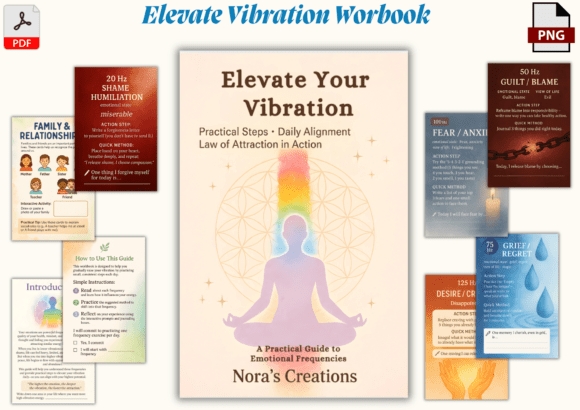
- Two flexible formats: Instant-download PDF (ideal for printing at home or school) and PNG files (perfect for tablets, interactive whiteboards, or telehealth sessions).
- Print-friendly sizing: Optimized at 6x9 inches—fits standard printers, binders, and lap desks without cropping or scaling headaches.
- No prep required: No laminating, cutting, or lesson planning. Open, print, and begin—even mid-afternoon on a tough day.
Who Benefits Most—and How to Begin Gently
The Anxiety Confidence Workbook shines brightest for children who:
- Often say “I can’t” before trying something new
- Ask repetitive “what if” questions—especially at bedtime
- Experience physical signs of anxiety (stomachaches, headaches, restlessness) without clear medical cause
- Struggle to identify or name emotions beyond “mad” or “sad”
- Respond well to art, storytelling, or movement-based learning
But here’s what many parents don’t realize: you don’t need to wait for things to get “bad enough.” Starting early—before patterns harden—builds resilience like muscle memory. And beginning doesn’t mean diving into heavy topics. Try this:
- Start with joy: Flip to the gratitude rainbow. Ask, “What made you smile today—even just a little?”
- Keep it light: Spend 5 minutes coloring the worry jar together—not to “fix” worry, but to make it visible and shared.
- Follow their lead: If they skip a page or scribble over instructions, that’s data—not defiance. It tells you where their energy lives right now.
A Resource Rooted in Trust, Not Trends
In a landscape crowded with quick-fix apps and oversimplified “calm-down” charts, the Anxiety Confidence Workbook stands out by honoring complexity without overwhelming simplicity. It doesn’t promise anxiety will disappear. It promises something more powerful: that your child can learn to hold their feelings with kindness, understand their body’s wisdom, and trust their capacity to grow—even when things feel shaky.
That’s not optimism. It’s evidence-based support, wrapped in glitter-free, monster-powered compassion.
Ready When You Are
You don’t need special training. You don’t need perfect calm yourself. You just need willingness—to sit beside your child, turn the page, and say, “Let’s see what this one does.” Because confidence isn’t built in grand declarations. It’s grown in quiet moments of choice, color, and connection—one illustrated page, one brave breath, one worry transformed at a time.