Emotion Processing Worksheets
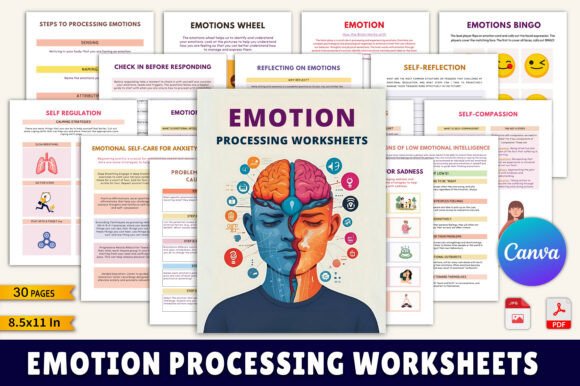
The Emotion Processing Worksheets is a guided self-help planner designed to support individuals in identifying, understanding, and regulating their emotions through structured, evidence-informed activities. It draws from well-established psychological frameworks—primarily cognitive behavioral therapy (CBT) and emotional intelligence principles—to offer accessible, step-by-step exercises. Rather than serving as a clinical intervention, it functions as a reflective and practical tool for personal growth, emotional literacy, and everyday resilience building.
People often seek resources like the Emotion Processing Worksheets when they notice recurring emotional patterns—such as heightened anxiety before meetings, difficulty recovering from criticism, or feeling overwhelmed without clear cause. Others turn to them after recognizing gaps in emotional vocabulary, trouble distinguishing between thoughts and feelings, or challenges communicating needs in relationships. The worksheets meet a practical need: to move beyond vague awareness (“I feel off”) toward precise naming, contextual understanding, and intentional response.
One key benefit is its emphasis on scaffolding. Each worksheet introduces concepts incrementally—starting with situational awareness (e.g., “What happened just before you felt upset?”), progressing to thought-emotion-behavior linkages, and extending into skill-building like grounding techniques or reframing unhelpful beliefs. The inclusion of an emotion wheel and bingo-style flip cards supports lexical expansion, which research links to improved regulation—people who can name emotions with specificity tend to manage them more effectively. Journaling prompts encourage pattern recognition over time, while sections on gratitude and assertive communication aim to strengthen relational habits grounded in self-awareness.
The workbook also integrates self-care and resilience practices not as abstract ideals but as concrete, repeatable actions. For example, “sitting with emotions” is introduced alongside physiological grounding cues; problem-solving templates guide users through evaluating options rather than defaulting to avoidance or rumination. These features reflect an understanding that emotional regulation is both cognitive and embodied—and that consistency matters more than intensity.
However, users should consider several practical tradeoffs. Because the Emotion Processing Worksheets is a self-guided resource, it does not include real-time feedback, therapist interpretation, or adaptive pacing based on individual progress or distress levels. It assumes baseline capacity for reflection and motivation to engage regularly. Individuals experiencing acute symptoms—such as persistent hopelessness, dissociation, or suicidal ideation—may find the worksheets insufficient without concurrent professional support. Similarly, those new to CBT concepts may benefit from supplemental explanation or coaching to fully grasp terms like “cognitive distortion” or “behavioral activation.”
The format—editable Canva templates and print-ready PDFs—offers flexibility for personalization and accessibility. Users can adapt layouts, add notes digitally, or print physical copies for handwriting. Yet this modularity requires some technical comfort with Canva or PDF annotation tools. Those preferring fully automated digital journaling (e.g., with mood tracking analytics or reminders) may find the static nature of the worksheets less engaging over time.
The Emotion Processing Worksheets is likely a strong fit for adults seeking a low-barrier, structured way to begin or deepen emotional self-study—particularly those already familiar with basic mental health concepts or who have previously engaged in therapy and want reinforcement tools. It suits people managing mild-to-moderate stress, navigating life transitions (e.g., career shifts, parenting changes), or aiming to improve communication in close relationships. Educators, coaches, or peer supporters may also use select pages as discussion aids—provided ethical boundaries around scope of practice are observed.
Conversely, alternatives may be more appropriate in certain situations. For instance, someone newly exploring emotional awareness might first benefit from audio-based mindfulness programs or interactive apps that provide guided instruction and immediate feedback. Individuals with complex trauma histories may require trauma-informed modalities—such as somatic experiencing or dialectical behavior therapy (DBT)—delivered by trained clinicians, rather than self-directed CBT-aligned materials. Likewise, those needing accountability or tailored behavioral experiments may prefer working with a licensed therapist who can co-create and adjust interventions in real time.
When deciding whether the Emotion Processing Worksheets align with your goals, ask yourself three questions: First, do I have the capacity to reflect consistently—even for 5–10 minutes daily—without external prompting? Second, am I looking to build foundational skills (e.g., naming emotions, noticing triggers, pausing before reacting) rather than resolve deeply entrenched patterns? Third, do I value tangible, reusable tools over dynamic or adaptive platforms?
If the answer to all three is yes, the worksheets offer a coherent, research-anchored pathway forward. Their strength lies not in novelty but in clarity: each page invites deliberate attention, reduces ambiguity about *how* to begin, and normalizes emotional complexity without pathologizing it. They do not promise transformation overnight—but they do support the kind of small, repeated engagements that, over weeks and months, shift how people relate to themselves and others.
It’s also worth noting that emotional growth rarely follows a linear path. Some users may complete every worksheet only once and gain lasting insight; others may return to specific pages repeatedly during stressful periods. Neither approach is “correct.” What matters is alignment with your current needs—not perfection in execution.
Finally, while the Emotion Processing Worksheets provides valuable structure, it works best when integrated into broader self-care practices: adequate sleep, movement, social connection, and professional support when needed. No worksheet replaces human attunement or clinical expertise—but as one component of a thoughtful, responsive self-support strategy, it holds measurable utility for many.