Business Action Planner for Beginners
Starting a business doesn’t require a perfect idea, a massive budget, or years of experience—it requires clarity, direction, and actionable next steps. That’s where the Business Action Planner for Beginners stands apart: not as another theoretical guide or passive checklist, but as an interactive, process-driven tool designed to move you from uncertainty to intentional action in under 30 minutes.
This isn’t a static PDF you skim and file away. It’s a working document—designed by Nora’s Creations with real workflow integration in mind—that supports decision-making *before* launch, refines strategy *during* early execution, and reinforces consistency *after* your first milestones. Whether you’re evaluating a side hustle idea over coffee, preparing to pitch a freelance service, or deciding whether to build a digital product versus a content-based brand, the planner meets you where you are—not where generic advice assumes you should be.
How It Fits Into Your Real-World Workflow
The Business Action Planner for Beginners works most effectively when treated as a living part of your planning cycle—not a one-off exercise. Think of it like a compass calibrated to your values, skills, and available resources. You’ll use it differently depending on your stage:
- Before committing time or money: Run the step-by-step quiz to test alignment between your strengths and viable business models (e.g., service-based freelancing vs. scalable digital products). This prevents misaligned investments—like building a course before validating demand or investing in inventory without assessing fulfillment capacity.
- During early implementation: Use the interactive worksheets to map your starter plan—not as a rigid roadmap, but as a lightweight scaffold. For example, after identifying “freelance copywriting” as your best-fit path, the worksheet helps you define your first three ideal client profiles, outline a simple outreach sequence, and schedule your first portfolio-building project—all in one place.
- After launching your first offer: Return to the reflection trackers and confidence-boosting exercises to assess what’s working—not just in terms of revenue, but energy, sustainability, and learning velocity. This builds long-term awareness that informs your next iteration, not just your next task.
Unlike broad-brush business frameworks, this planner is built around *micro-decisions*: choosing your first platform, naming your offer, setting boundaries around availability, or deciding how much to charge based on value—not hourly rates. Each section connects directly to tangible actions you can complete in under 20 minutes, making it compatible with tight schedules and shifting priorities.
Integration With Tools You Already Use
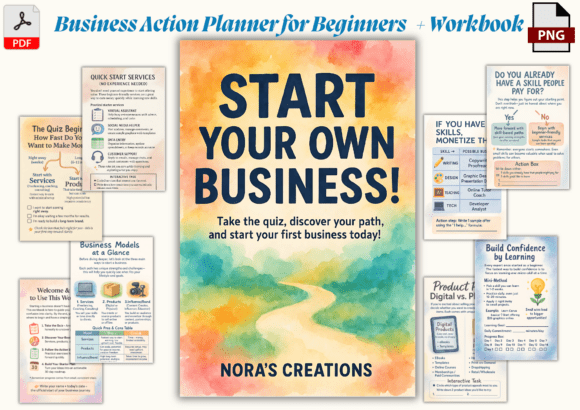
The Business Action Planner for Beginners doesn’t replace your existing tools—it clarifies *how* and *when* to use them. Its dual-format delivery (PDF + PNG) ensures seamless compatibility across workflows:
- PDF users: Fillable fields work smoothly in Adobe Acrobat, Preview (macOS), or free alternatives like Xodo or Foxit. You can annotate, save versions, and export completed sections as standalone notes for Notion, Obsidian, or Google Docs.
- PNG users: Import pages into note-taking apps like GoodNotes or Notability for handwriting, sketching, or voice annotation. Ideal for visual thinkers or those who prefer tactile engagement—even on tablets.
- Team or accountability contexts: Share specific worksheets (e.g., your starter plan or reflection tracker) with a mentor, accountability partner, or small mastermind group. The clean watercolor visuals reduce cognitive load, making collaboration more focused and less overwhelming.
It also complements common platforms without requiring setup: no logins, no subscriptions, no syncing delays. You don’t need to migrate data or learn new interfaces—just open, engage, and act. That simplicity increases consistency, especially during early-stage momentum when friction often derails progress.
Practical Implementation Tips That Stick
Here’s what makes the Business Action Planner for Beginners effective beyond the first session—and how to get the most out of it over time:
Start Small, Not Perfect
Complete just the quiz and one worksheet in your first sitting. Don’t aim to “finish” the workbook. Focus instead on extracting one usable insight—like identifying your top three transferable skills or naming your first minimum viable offer. That insight becomes your anchor for the next 48 hours of action.
Use It Like a Decision Filter
Before saying yes to a new opportunity—a collaboration request, a platform change, or a course purchase—ask: “Does this align with what my planner identified as my core path?” If it doesn’t support your defined model (service, product, or content), pause. This reduces scope creep and preserves bandwidth for what matters most.
Revisit, Don’t Replace
Return to your completed pages every 2–3 weeks—not to redo them, but to compare intention with outcome. Did your outreach plan generate replies? Did your pricing reflect perceived value? These reflections aren’t about judgment; they’re quality control for your decision-making system.
Pair With Time-Based Anchors
Attach planner use to existing habits: review your reflection tracker every Sunday evening while reviewing your calendar, or complete a worksheet during your weekly 90-minute focus block. Consistency grows from integration—not willpower.
Why Design Matters for Execution
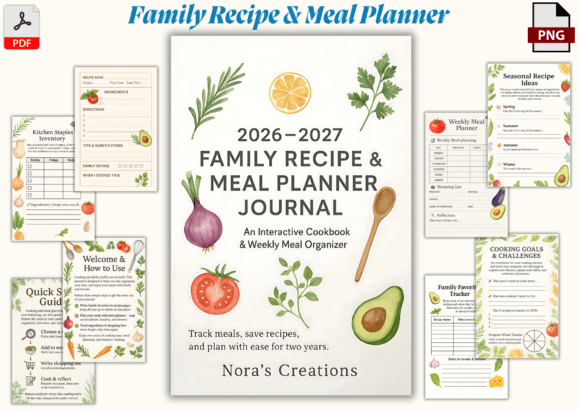
The watercolor-style visuals aren’t just aesthetic—they serve a functional purpose. Visual warmth lowers the psychological barrier to engagement, especially for those who associate “business planning” with dry spreadsheets or intimidating jargon. The 6x9 inch size fits naturally on a desk or lap, encouraging regular, low-pressure interaction. And because each page balances white space with clear visual hierarchy, your attention stays on *what to do*, not *how to navigate*.
This level of usability directly impacts efficiency. When layout supports cognition—not competes with it—you spend less time decoding instructions and more time building momentum. That’s why creators, educators, and small business owners consistently report using the planner not once, but repeatedly—as their thinking evolves, their offers refine, and their goals shift.
Who Benefits Most—and How
The Business Action Planner for Beginners serves people who value clarity over complexity. It’s especially useful for:
- Freelancers and solopreneurs who need to translate skills into market-ready offers—without getting stuck in positioning paralysis.
- Educators and coaches building their first digital product or cohort-based course, using the planner to clarify audience fit before production begins.
- Bloggers and content creators exploring monetization paths beyond ads or affiliates—mapping realistic transitions to services or digital products.
- Hobbyists turning passion into income, using the quiz to identify which aspect of their craft has strongest commercial resonance (e.g., teaching, custom work, or template design).
- Professionals in transition—whether returning from leave, shifting industries, or seeking autonomy—using the workbook to reconnect with transferable strengths before drafting a resume or LinkedIn headline.
No prior business knowledge is required. What *is* required is willingness to answer honest questions—and then act on the answers. That’s the core workflow the planner supports: question → insight → action → reflection → refinement.
If you’ve ever paused mid-planning because the next step wasn’t clear—or abandoned a great idea because it felt too big—the Business Action Planner for Beginners exists to close that gap. It won’t write your website copy or book your first client. But it will help you decide *which* website to build, *who* that first client should be, and *what* to say that reflects your actual strengths—not someone else’s template. That’s not just planning. It’s grounded, repeatable, human-centered execution.